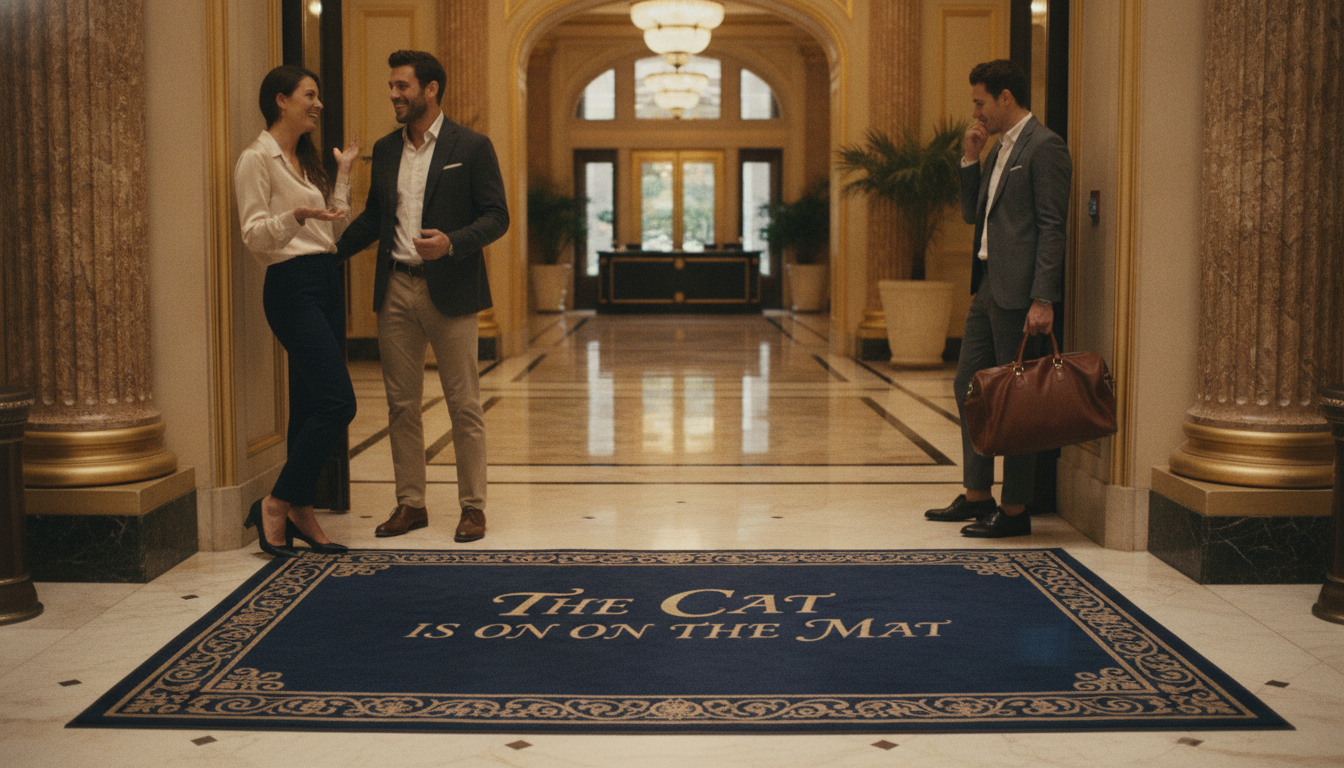
"The Cat is on the Mat" Won't Fix the AC
Why generic English courses are the "continental breakfast" of training—and why your hotel staff deserves a Michelin-starred approach.
The 4th-Floor Fumble
We’ve all seen it.
A guest is mid-explanation, trying to describe how their luggage ended up on the wrong floor or why they need a very specific, very urgent gluten-free recommendation for a 9 PM dinner. Your staff member—who has been diligently attending "General English" classes for months—is doing their best. They know that "the apple is on the table." They can conjugate to be in their sleep.
But explaining a room upgrade or de-escalating a "the shower is lukewarm" situation?
Suddenly, it’s all sweaty palms and a frantic search for a manager. That’s the gap between General English and ESP (English for Specific Purposes). One is a library; the other is a toolkit.
The "Buffet" Problem
Traditional English courses are like a hotel buffet at 10:25 AM. There’s a lot of stuff there, but most of it isn't what you actually need right now.
Does your concierge need to know how to describe their last summer vacation in the mountains? Probably not. Do they need to know how to politely tell a guest that the spa is fully booked until Tuesday? Absolutely.
When you put your team through generic language training, you’re paying for them to learn 80% of a language they will never use at work. It’s inefficient, it’s boring for the staff, and it doesn't solve your guest satisfaction scores.
ESP: The Surgical Strike of Learning
English for Specific Purposes (ESP) isn't about "learning a language." It’s about mastering a job in another language.
Instead of "The cat is on the mat," the curriculum looks like:
- The Art of the Apology: How to turn a double-booked room into a loyal customer.
- The "No" that sounds like a "Yes": Policy enforcement without the attitude.
- The Technical Handover: Making sure maintenance actually understands what’s wrong with the boiler.
Why L&D Managers are Ditching the Textbook
In hospitality, time isn't just money; it's guest satisfaction. Pulling a receptionist off the floor for two hours to study the Past Continuous is a tall order when the lobby is buzzing.
But twenty minutes of high-intensity, role-specific practice? That’s a different conversation.
When your team learns English that applies directly to their next shift, the shift itself changes:
- Genuine Confidence. They aren't terrified of the phone ringing because they actually have the script for what's on the other end.
- Seamless Service. Clear communication is the straightest line to a 5-star review and a guest who feels heard, not just "processed."
It's Not About Being Fluent; It's About Being Functional
You don't need a team of Shakespearean scholars. You need hospitality pros who are unstoppable in English.
The move from "General" to "Specific" is the difference between a guest feeling "managed" and a guest feeling "cared for." If your training budget is still going toward teaching the names of farm animals, you might be teaching your team how to pass a test, when they really need to know how to run a hotel.
Curious about how specialized modules can actually fit into a chaotic hotel schedule? It might be simpler than you think.